
 English


7 Crucial Things to Check Before Buying Diamond Jewelry, The Details That Matter Most

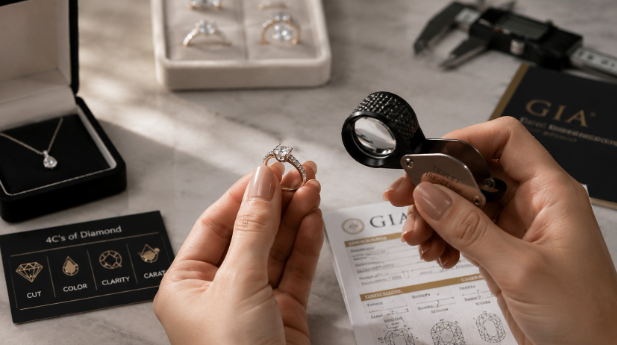
Buying diamond jewelry is a major milestone. Whether you are hunting for the perfect engagement ring or upgrading your personal collection, it is incredibly easy to feel overwhelmed by all the choices out there. Most people know about the basic 4Cs, which are cut, clarity, color, and carat weight, but truly fine jewelry requires looking much closer.
When you are investing hard earned money into diamond rings, earrings, bracelets, or necklaces, the magic is always hidden in the small details. Let us dive into seven crucial things you need to check before swiping your card, ensuring you get the absolute best value and a piece that lasts a lifetime.
1. The Real Impact of the Cut Grade
Many buyers think carat weight is the most important factor because they want a big stone. However, the cut is actually what gives a diamond its fire and brilliance. A poorly cut stone will look dull and lifeless, even if it has a massive carat size.
When looking at diamond rings especially, ensure the cut grade is Excellent or Ideal. A top tier cut ensures that light enters the stone and reflects right back to your eyes. If the cut is too shallow or too deep, the light leaks out the bottom, making the diamond look dark in the center. Do not compromise on cut quality just to get a larger stone.
2. Setting and Prong Security
The way a diamond is secured in its setting matters just as much as the stone itself. For daily wear pieces like diamond bracelets, which tend to bump against desks and doors, the setting needs to be incredibly durable.
Check the prongs carefully. Are they even? Do they catch on clothing? For diamond earrings, make sure the backings feel tight and secure. A lost earring is a heartbreaking experience. Look for six prong settings for larger stones in rings for extra security, or a sturdy bezel setting if you live an active lifestyle.
3. Undertone and Color Matching
When jewelry pieces feature multiple stones, like in tennis bracelets or intricate diamond necklaces, the uniformity of the color is vital. You do not want one diamond looking bright white while the one next to it has a distinct yellowish tint.
Jewelers often use lower color grades for smaller accent stones to save money. Always inspect the piece under natural light if possible. Ensure all the diamonds blend together seamlessly so the entire piece looks cohesive and bright.
4. The Hidden World of Fluorescence
Fluorescence is a fascinating property where a diamond glows under ultraviolet light. While a faint glow is completely fine, strong fluorescence can sometimes make a diamond look hazy, milky, or oily in regular sunlight.
This is particularly important for high color grades like D, E, or F. If you are buying a premium stone, strong fluorescence can actually drop the market value significantly. Always ask the jeweler to show you the stone under a UV light and double check how it looks in normal daylight before making your final decision.
5. Metal Choice and Daily Wearability
The metal you choose affects both the look and the longevity of your jewelry. Platinum is incredibly durable and holds stones very securely, but it is heavier and more expensive. White gold is beautiful but requires rhodium plating every few years to keep its bright white shine.
Think about how you plan to wear the piece. If you are buying diamond necklaces that sit against the skin, make sure the metal is hypoallergenic if you have sensitive skin. For diamond rings, match the metal to your lifestyle, 14k gold is often tougher than 18k gold because it contains more alloying metals.
6. Verification and Certification
Never buy a significant piece of diamond jewelry without a grading report from a reputable independent lab, such as the GIA. This certificate is your proof that the diamond is natural and matches the quality the jeweler is claiming.
Some stores use their own in-house certificates, which can often be biased. An independent report ensures you know exactly what you are paying for, covering everything from laser inscriptions on the girdle to exact millimeter measurements.
7. The Visual Proportions Beyond the Certificate
Certificates are great, but they do not tell the whole story. Two diamonds can have the exact same grades on paper but look totally different in person. This is due to proportions and bow tie effects, which are dark shadows that can appear across the center of oval, pear, and marquise cuts.
You need to trust your eyes. Move the piece around under different lighting conditions. Does it dance with light, or are there dead zones where no sparkle happens? Fine jewelry should captivate you the moment you look at it.
Final Thoughts for Savvy Buyers
Investing in fine jewelry is an emotional and financial journey. By paying close attention to these hidden details, from prong security to stone symmetry, you protect your investment. Take your time, ask the tough questions, and buy from jewelers who respect your curiosity. Your future heirloom deserves nothing less than perfection.