
 English

How Free Online Greeting Cards Help Teams Stay Connected at Work

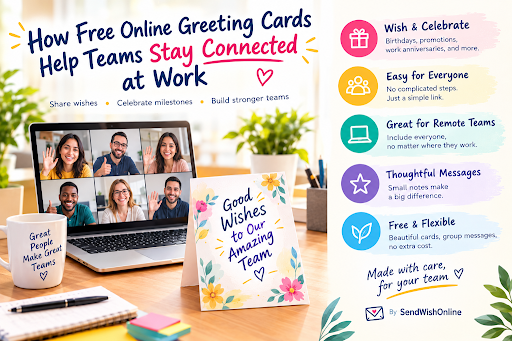
On a busy workday, a team may have little time for anything beyond meetings, emails, and deadlines. When a coworker celebrates a birthday or announces their last day at the company, everyone wants to share a few kind words, but coordinating individual messages can be difficult. A simple greeting card can bring those messages together and remind the person that their colleagues appreciate them.
Today, digital cards make this process easier, especially for remote and hybrid teams. With greeting cards online free, coworkers can share wishes, celebrate milestones, and stay connected without needing to pass a paper card around the office.
Why Thoughtful Messages Matter in the Workplace
Workplace relationships develop through everyday interactions. A colleague who receives a sincere thank-you or a warm birthday greeting may feel more connected to the people they work with.
Greeting cards also provide an opportunity to recognize moments that might otherwise pass unnoticed. These can include work anniversaries, promotions, new roles, farewells, and team achievements. A message does not need to be long or formal to feel meaningful.
The most important part is sincerity. Instead of writing the same generic line for every occasion, coworkers can mention a helpful contribution, share a positive memory, or offer good wishes for the future.
How to Choose Greeting Cards Online for Your Team
Before selecting a card, think about the occasion and the recipient. A cheerful birthday card may suit a close teammate, while a professional appreciation card might be more appropriate for a manager or a colleague from another department.
When looking for greeting cards online free, consider these practical points:
- Easy access: Make sure coworkers can open and contribute to the card without unnecessary difficulty.
- Suitable designs: Choose a style that matches the occasion and the recipient’s personality.
- Room for messages: A group card should give contributors enough space to write their own wishes.
- Sharing options: A simple link can help remote and office-based colleagues participate.
- Free features: Check whether the platform limits contributors or requires payment for particular options.
Choosing a suitable card makes the process easier and helps the final greeting feel thoughtful rather than rushed.
How to Create a Group Greeting Card Step by Step
Organizing a card for a team does not need to be complicated. A clear process helps everyone participate without adding unnecessary work.
1. Choose the occasion. Decide whether the card is for a birthday, promotion, work anniversary, appreciation, or farewell.
2. Select an organizer. One person can coordinate the card, invite contributors, and keep track of the deadline.
3. Invite coworkers to contribute. Share the card link with relevant team members. Make participation optional so people can contribute comfortably.
4. Encourage personal messages. Ask everyone to share a short wish, a memory, or a few words of appreciation. Specific messages usually feel more genuine than repeated phrases.
5. Review the card. Check for spelling mistakes, inappropriate jokes, or personal information that should not be shared.
6. Send it at the right time. Present the card during a team meeting or share it on the occasion itself whenever possible.
For remote teams, set a clear deadline and allow enough time for colleagues in different time zones to contribute.
What to Write in a Card for a Coworker
Finding the right words can be difficult, particularly when several people are contributing to one card. Keeping messages short and sincere is often the best approach.
Here are a few examples:
- For appreciation: “Thank you for always being willing to help. Your support makes working together easier.”
- For a birthday: “Wishing you a wonderful birthday and a year filled with happiness and success.”
- For a new role: “Congratulations on your new opportunity! Wishing you every success in this exciting next chapter.”
- For a farewell: “It’s been great working with you. Thank you for everything you’ve contributed, and best wishes for what comes next.”
A farewell card for coworker celebrations can be especially meaningful when teammates include a shared memory or mention something they learned from the departing colleague. Avoid making every message sound identical; a variety of genuine voices makes a group card more personal.
Using Free Online Group Cards for Remote Teams
When employees work from different locations, passing around a physical card may not be practical. Digital group cards allow colleagues to contribute messages from their own devices and schedules.
They can also help teams include people who work part-time, travel frequently, or belong to another office. Rather than coordinating a paper card, the organizer can share a link and collect messages in one place.
SendWishOnline offers a collection of group cards that teams can explore for different occasions. Its free group cards page is one option for bringing coworkers’ messages together in a shared greeting.
The platform is only one part of the process, however. The card feels meaningful because of the thought and care contributors put into their messages, not simply because it was created online.
Common Mistakes to Avoid
Even a simple greeting can feel awkward if it is poorly planned. Keep these common mistakes in mind:
- Waiting until the last minute: Give coworkers enough time to contribute.
- Using only generic messages: Encourage people to add a personal thought when appropriate.
- Pressuring colleagues: Participation should be voluntary.
- Including unsuitable jokes: Humor should fit the recipient and the workplace.
- Forgetting remote employees: Invite relevant colleagues regardless of their location.
- Ignoring privacy: Avoid sharing personal details or photographs without permission.
A quick review before sending the card can help prevent misunderstandings and keep the greeting respectful.
Greeting Card Etiquette: Keep Messages Genuine
A workplace greeting should match the relationship and occasion. Friendly language is usually appropriate, but overly personal comments may make some colleagues uncomfortable.
For a farewell, focus on appreciation and good wishes rather than speculating about why someone is leaving. For a get-well or personal message, respect the recipient’s privacy and avoid asking questions they may not wish to answer.
It is also helpful to remember that not everyone expresses themselves in the same way. Some people write several sentences, while others prefer a short greeting. Both can be meaningful.
Final Thoughts
Small gestures can help coworkers feel noticed and appreciated, even during busy workweeks. Greeting cards offer a simple way to celebrate achievements, share good wishes, and bring team messages together.
Whether you are organizing a birthday greeting or a farewell card for coworker, focus on sincerity, good timing, and including the people who want to participate. Free online cards can make the process more convenient, especially for remote teams, while thoughtful messages are what give the gesture its lasting value.
Frequently Asked Questions
How can coworkers create a greeting card online for free?
Choose an online group-card service, select a suitable design, invite colleagues to contribute messages, and share the completed card at the right time. Check the service’s free-plan limits before starting.
What should you write in a farewell card for a coworker?
Thank the person for their contribution, mention a positive memory if appropriate, and wish them well in their next role or chapter.
Can remote employees contribute to a group greeting card?
Yes. Digital cards allow colleagues to contribute from different locations and schedules, making them useful for remote and hybrid teams.
What makes a workplace greeting card feel personal?
Specific messages, shared memories, sincere appreciation, and wishes suited to the occasion help a card feel more personal than a collection of generic greetings.