
 English

How to renew your car insurance policy easily and avoid costly mistakes

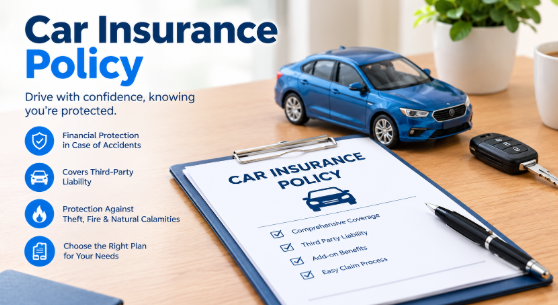
Renewing your car insurance policy before its expiry helps maintain the required insurance coverage and reduces the risk of driving uninsured. The online renewal process involves checking your existing policy, reviewing your coverage, updating vehicle details and completing payment. Understanding these steps can help vehicle owners avoid errors, unexpected expenses and gaps in protection.
When should you renew your car insurance policy?
You should renew your car insurance policy before its expiry date. An active policy helps maintain continuous coverage, subject to its terms and conditions. If your policy expires, you may lose insurance protection for incidents occurring during the gap.
Driving without the required third-party motor insurance is an offence under Indian motor vehicle law. A lapsed policy can also mean that you must complete additional checks before coverage can be issued again.
To avoid missing the renewal date, follow these practices:
- Check the expiry date printed on your existing policy.
- Set a reminder several days before the deadline.
- Keep your registration certificate and policy details available.
- Review your coverage before starting the renewal process.
- Complete the payment and verify the renewed policy document.
Do not assume that a grace period automatically extends your motor insurance coverage. Confirm the applicable terms with your insurer and avoid driving until the required insurance is in force.
How can you renew car insurance online?
Online renewal allows you to review policy details and complete the transaction digitally. The exact process may vary between insurers, but the following steps provide a practical guide.
Step 1: Enter your existing policy details
Visit your insurer’s official website or application and provide the requested information, such as your registration number or policy number. Check that the vehicle details displayed match your records.
Step 2: Review your current coverage
Check whether your policy provides third-party liability cover alone or includes own-damage protection. Review the insured declared value (IDV), deductibles and any add-ons included in your existing policy.
Step 3: Update relevant information
Confirm your contact details, vehicle specifications and claims history. If any information has changed, provide accurate details before proceeding.
Step 4: Compare the renewal terms
Review the premium, coverage limits, exclusions and applicable conditions. If you are considering a different insurer, compare the policies on equivalent coverage rather than price alone.
Step 5: Complete payment
Pay through the insurer’s authorised payment facility. Check the transaction confirmation and retain the payment receipt.
Step 6: Verify the renewed policy
Download the issued document and check the policyholder’s name, vehicle registration number, coverage and effective dates. Contact the insurer if you identify an error.
What mistakes should you avoid during renewal?
Small errors during renewal can create complications when you need to make a claim. Review these common mistakes before completing the transaction.
| Common mistake | How to avoid it |
| Renewing after expiry | Start the process before the existing policy ends |
| Entering incorrect vehicle details | Cross-check the registration number and vehicle specifications |
| Choosing cover based only on price | Compare benefits, exclusions and deductibles |
| Ignoring policy exclusions | Read the conditions to understand what is not covered |
| Providing incorrect claim history | Disclose previous claims accurately |
| Overlooking the no claim bonus (NCB) | Check eligibility and verify the applicable discount |
| Failing to save the policy | Download the issued document and payment receipt |
Avoid declaring that no claims were made if you have submitted a claim during the relevant period. Incorrect information can affect the accuracy of the renewal and the NCB calculation.
Should you review your coverage when renewing?
Yes. Renewal is an opportunity to assess whether your existing protection still suits your vehicle and driving requirements.
Third party car insurance covers legal liability for injury, death or property damage caused to another party, subject to applicable policy terms and limits. It does not automatically cover damage to your own vehicle.
A comprehensive policy generally combines third-party liability cover with own-damage protection, subject to its terms, exclusions and conditions. Before renewing, consider the following factors:
- Vehicle age and value: Review whether the insured declared value remains appropriate.
- Driving patterns: Consider how frequently and where you use the vehicle.
- Existing add-ons: Check whether optional covers remain relevant to your needs.
- Deductibles: Understand the amount you may need to contribute towards an eligible claim.
- Budget: Evaluate the premium alongside the coverage and exclusions.
If you are considering third party car insurance instead of broader cover, understand that the change may leave damage to your own vehicle uninsured.
What happens to your no claim bonus during renewal?
A no claim bonus is a discount on the own-damage premium for eligible policyholders who meet the insurer’s claim-free requirements. It is not a reduction in the insured value of the vehicle.
When renewing, verify the NCB shown in your renewal quotation and ensure that your claims history is correct. An incorrect declaration may affect the discount or create complications during claim verification.
If you switch insurers, ask how your existing NCB can be transferred and what evidence is required. Do not assume that the bonus will continue indefinitely after a policy expires. The applicable retention period and eligibility conditions should be confirmed with the insurer.
Conclusion
Renewing your car insurance policy on time helps avoid gaps in required coverage and provides an opportunity to review your protection. Check the expiry date, verify vehicle details, compare policy terms and confirm your NCB before paying. Saving the renewed document and checking its effective dates helps ensure that your insurance records remain accurate.