
 English


Why a PAN Card Check Is Useful When Onboarding New Clients or Employees

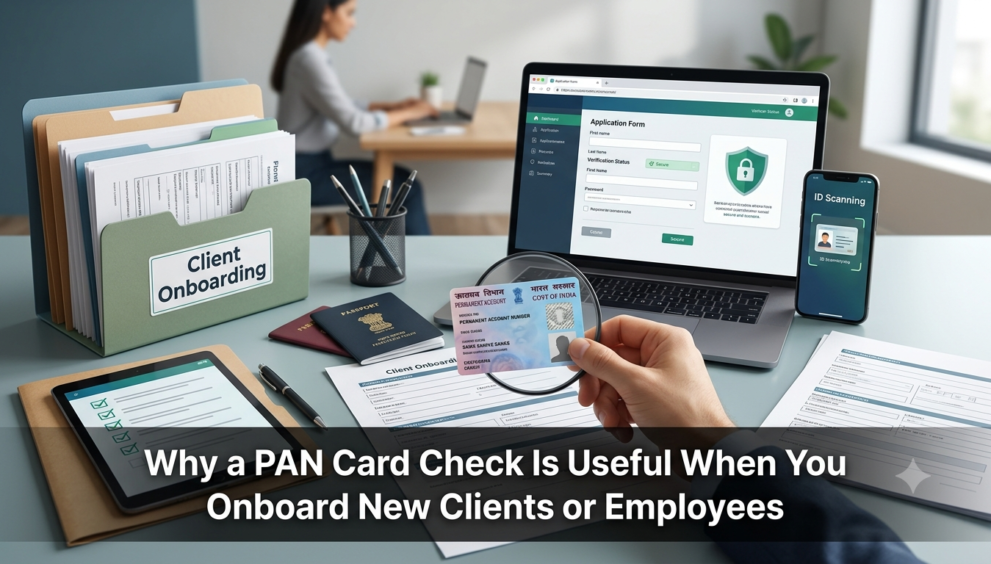
Verifying the identity of new clients and employees is an important part of maintaining accurate business records and reducing the risk of identity-related errors. A Permanent Account Number (PAN) is widely used for tax-related and financial transactions in India. Conducting a PAN card check can help businesses confirm PAN details and support their customer or employee verification processes.
What Is a PAN Card Check?
A PAN card check is the process of verifying the details associated with a Permanent Account Number. Depending on the verification method used, it can help establish whether the PAN details provided match the relevant records.
Businesses may use PAN verification as part of their onboarding procedures, particularly when dealing with financial transactions, vendor registration, client documentation or employment records. However, PAN verification alone does not establish a person’s complete financial history, character or trustworthiness.
Why Is PAN Verification Important During Onboarding?
1. Helps Verify Identity Details
When onboarding a new client or employee, businesses need to collect accurate identification information. Checking PAN details can help identify discrepancies in the information provided and reduce the likelihood of errors in official records.
A PAN card check can help individuals understand the verification process and the importance of confirming PAN-related details.
2. Supports Accurate Record-Keeping
Incorrect PAN details can create difficulties when maintaining financial, tax-related and employee records. Verifying the information during onboarding can help businesses identify errors early and maintain more reliable documentation.
Accurate records may also make it easier to retrieve information when required for legitimate business or compliance purposes.
3. Helps Businesses Follow Applicable Procedures
Depending on the nature of the business and the transaction, PAN details may be required for tax reporting, financial activities or other regulatory purposes. Checking the information can support the relevant documentation process.
Businesses should follow applicable legal requirements and use authorised verification methods. A PAN check should not be treated as a substitute for other checks that may be required under applicable regulations.
4. Reduces Documentation Errors
Missing digits, incorrect names and mismatched information can delay onboarding. Reviewing PAN details alongside other permitted identity documents can help businesses identify inconsistencies before completing their records.
The verification process should be proportionate to the purpose for which the information is collected, and personal information should be handled securely.
How Can Businesses Verify PAN Details?
Businesses and individuals should use appropriate, authorised verification channels for PAN-related checks. The exact process may depend on the type of verification required and the services available through the relevant official platform.
A typical process may include:
- Collecting the PAN details required for a legitimate purpose.
- Checking the information for typing errors or inconsistencies.
- Using an authorised verification facility where applicable.
- Comparing the returned details with the information provided.
- Recording the verification outcome securely and addressing any discrepancies.
Organisations should explain why PAN information is required and avoid collecting more personal information than necessary.
What Is the PAN Card Password Used For?
When downloading certain PAN-related documents, a password may be required to open the file. The password format depends on the document and the issuing or service provider’s instructions.
Users should follow the specific instructions supplied with their document. They should also avoid sharing document passwords unnecessarily, particularly with people or organisations that do not need access to the document itself.
For more information, read this guide to the PAN card password, which explains how password-protected PAN documents may be accessed.
Best Practices for PAN Verification During Onboarding
Businesses can make their onboarding procedures more reliable by following a few practical steps:
- Use authorised sources: Verify PAN details through appropriate, authorised channels.
- Check information carefully: Review names and other required details for discrepancies.
- Protect personal data: Restrict access to PAN information and store it securely.
- Collect information responsibly: Request PAN details only when there is a legitimate business or legal need.
- Use additional checks when required: PAN verification does not replace other identity, employment, compliance or background checks.
- Follow applicable rules: Ensure the verification process complies with relevant privacy and regulatory requirements.
For additional information about financial products and services, visit Bajaj Finance and explore the resources available on its official website.
Conclusion
A PAN card check can be a useful part of onboarding new clients or employees by helping businesses confirm PAN-related details, maintain accurate records and identify documentation discrepancies. However, it should be used alongside other appropriate verification measures rather than as the sole basis for making decisions about an individual.
By using authorised verification methods, protecting personal information and following applicable requirements, businesses can make their onboarding processes more accurate, secure and efficient.