
 English


Granite vs Quartzite Countertops: Which One Is Better for Your Kitchen?

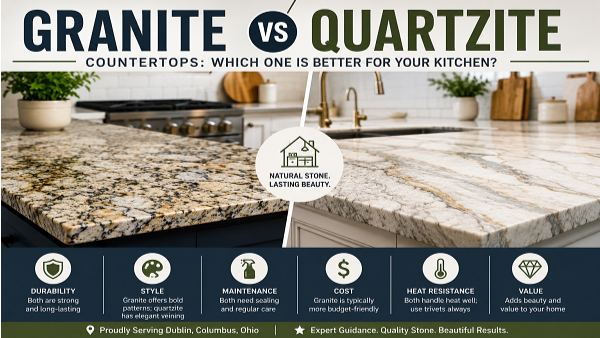
Choosing a kitchen surface can feel difficult because granite and quartzite may look similar at first. Both are natural stones, and both can give a kitchen a rich, high-end appearance. However, they differ in color, strength, care needs, and price. Therefore, I always compare how each material will work in daily life before making a final choice.
When I begin a countertop project, I prefer to look at full slabs instead of small samples. Keystone Granite Oh can help homeowners compare granite countertops for kitchen projects with other natural stone choices in Dublin, Columbus, Ohio. As a result, homeowners can see the true colors, patterns, and surface details before selecting a slab.
Granite often has small mineral spots, flowing patterns, and bold color changes. Quartzite, on the other hand, often has softer movement and long veins. Because of this difference, granite can look active and dramatic, while quartzite can look calm and elegant.
For me, the better material depends on the way the kitchen will be used. A family that cooks every day may focus on strength and cleaning. Meanwhile, a homeowner planning a luxury kitchen may care more about color, movement, and overall style.
Key Takeaways
- Granite offers many colors, strong daily performance, and a wide range of price options.
- Quartzite offers natural strength and elegant veining, but some slabs may cost more.
- The right stone depends on your design goals, maintenance habits, kitchen use, and budget.
Pros, Cons, and a Clear Comparison
Granite and quartzite both come from the earth. However, nature forms them in different ways.
Granite is an igneous rock. It forms when melted rock cools and hardens below the earth’s surface. Therefore, granite often contains visible grains of quartz, feldspar, mica, and other minerals.
Quartzite begins as sandstone. Over time, strong heat and pressure change the sandstone into a harder natural stone. As a result, quartzite often has a dense structure and flowing patterns.
Both stones can last for many years. Still, they do not always perform or look the same.
Appearance and Natural Pattern
Granite offers a wide range of colors and patterns. Some slabs have small, even grains. Others have strong waves, large mineral spots, or dramatic color changes.
For example, granite may appear in white, gray, black, brown, red, green, blue, or gold tones. Therefore, I can often find a granite slab that matches almost any cabinet color.
Granite also works with many home styles. A simple black slab can suit a modern kitchen. Meanwhile, a warm brown or gold pattern can match traditional wood cabinets.
Quartzite often has a softer and more flowing appearance. Many varieties have white, cream, gray, beige, or soft gold backgrounds. In addition, long veins may move across the slab.
Because of this style, some quartzite slabs can look similar to marble. However, quartzite usually offers greater scratch resistance than marble.
For me, granite works well when I want bold color or noticeable mineral detail. On the other hand, quartzite may work better when I want a lighter and more elegant surface.
Benefits of Granite
Granite remains a popular kitchen material because it offers several practical benefits.
It Comes in Many Colors
Granite offers one of the widest natural color ranges. Therefore, homeowners have many choices.
A light slab can brighten dark cabinets. Meanwhile, a deep black or charcoal surface can create contrast beside white cabinets.
Some slabs also include blue, green, red, or gold mineral details. As a result, granite can become the main design feature in the kitchen.
It Handles Daily Use Well
Granite is a strong natural stone. Therefore, it can handle regular cooking, meal preparation, and family use.
It also resists many common scratches. Even so, I still recommend using cutting boards because knives can become dull and small marks can still happen.
It Handles Heat Better Than Many Materials
Granite usually handles moderate heat well. However, I would not place a very hot pan directly on the surface.
Sudden temperature changes may cause stress in any stone. Therefore, I would use trivets near the stove and oven.
It Offers Different Price Levels
Granite comes in common and rare varieties. Because of this, homeowners can often find options at different price points.
Some common colors may fit a moderate budget. Meanwhile, rare patterns or imported slabs may cost much more.
This range makes granite easier to consider for many kitchen projects.
It Can Add Long-Term Value
A well-chosen granite surface can make a kitchen feel finished and attractive. Moreover, many buyers recognize granite as a strong natural material.
However, value depends on more than the stone. Good color choices, proper fabrication, and skilled installation also matter.
Drawbacks of Granite
Although granite performs well, it still has some limits.
It May Need Sealing
Many granite slabs need sealing from time to time. The exact schedule depends on the stone’s porosity, finish, and daily use.
A quality sealer helps reduce liquid absorption. However, it does not make the surface completely stain-proof.
Therefore, I would still clean spills quickly, especially oil, wine, coffee, and dark sauces.
Some Patterns Look Very Busy
Bold granite can become a beautiful feature. However, it may compete with detailed cabinets, patterned floors, or a strong backsplash.
For that reason, I look at the entire room before choosing a dramatic slab.
If the cabinets already have a lot of movement, I may choose a quieter granite pattern. Likewise, a simple kitchen may handle a bolder surface.
Natural Variation Can Make Matching Harder
Every granite slab has natural differences. Therefore, matching separate slabs may take careful planning.
A skilled fabricator can place seams in less noticeable areas. Still, the pattern may not connect perfectly across each section.
Edges Can Chip
Granite is strong, but narrow edges and sink areas can still chip after a hard impact.
Therefore, I would avoid hitting the edge with heavy pans or appliances. In addition, proper support helps protect large overhangs.
Benefits of Quartzite
Quartzite also offers several strong benefits for kitchen use.
It Has an Elegant Natural Look
Many quartzite slabs have soft backgrounds and long veins. Therefore, they can create a light and open feeling.
This material can work well with white, cream, gray, navy, green, black, and wood cabinets. Moreover, its natural movement can add interest without making the room feel too busy.
It Offers Strong Scratch Resistance
True quartzite is a very hard natural stone. As a result, it can resist many everyday scratches.
However, I would still use cutting boards. They protect the surface and also help keep knives sharp.
It Handles Heat Well
Quartzite usually handles heat better than resin-based materials. Still, I would use trivets under hot cookware.
A heat pad protects the finish and lowers the risk of sudden temperature stress. Therefore, it remains a smart daily habit.
Each Slab Looks Unique
Nature creates every quartzite slab differently. As a result, each surface has its own veins, shade changes, and natural marks.
For homeowners who want a one-of-a-kind kitchen, this can be a major benefit.
It Can Create a Luxury Appearance
Quartzite often has the soft movement people connect with marble. However, it usually offers stronger scratch resistance.
Because of this mix, it can suit homeowners who want natural elegance and strong daily performance.
Drawbacks of Quartzite
Quartzite is beautiful and strong, but it also has some possible downsides.
Some Slabs Can Be Expensive
High-quality quartzite may cost more than many common granite varieties. Rare colors, dramatic veins, and limited availability can raise the price.
In addition, the stone’s hardness may require more fabrication time. Therefore, cutting and shaping can add to the total cost.
It May Need Sealing
Quartzite is a natural stone, and some slabs can absorb liquids. Therefore, sealing may be needed.
A sealer helps slow stains from oil, coffee, wine, and food. However, spills should still be removed quickly.
Some Stones Are Sold Under Confusing Names
Not every slab sold as quartzite performs like true quartzite. Some stones may be softer and closer to marble in behavior.
Therefore, I would ask the supplier about the stone’s hardness, origin, care needs, and test results.
This step matters because a softer material may scratch or etch more easily than expected.
Fabrication Can Be More Difficult
Quartzite can be very hard. Because of that, cutting sink openings, shaping edges, and joining seams may require extra skill.
A poor fabricator may create rough edges or weak cutouts. Therefore, experience with the material is important.
Durability Comparison
Granite and quartzite both offer strong daily performance. However, true quartzite is often harder than granite.
This extra hardness can help it resist scratches. Still, hardness does not mean the stone cannot crack or chip.
Granite also performs well in busy kitchens. In fact, many granite surfaces remain useful for decades when they receive proper care.
For homeowners in Dublin, Columbus, Ohio, I would consider how the kitchen is used. If the island handles cooking, schoolwork, meals, and gatherings, both stones can work well.
However, installation quality matters just as much as the material. Weak cabinets, poor seams, or unsupported overhangs can cause problems with either stone.
Stain Resistance Comparison
Both materials may need sealing because both can have natural pores.
However, porosity can vary from one slab to another. Some granite is very dense, while other granite absorbs liquid more quickly.
The same is true for quartzite. Therefore, I would not judge stain resistance only by the stone’s name.
A simple water test can help show whether a surface needs sealing. If water darkens the stone after sitting for a short time, the surface may need protection.
Even with sealing, I would clean spills quickly. Oil, wine, coffee, juice, and dark sauces can cause marks when left too long.
Cleaning Comparison
Granite and quartzite have similar daily cleaning needs.
For both surfaces, I would use:
- Warm water
- Mild dish soap
- A soft cloth
- A gentle stone-safe cleaner
I would avoid:
- Vinegar
- Lemon-based cleaners
- Abrasive powders
- Rough cleaning pads
- Strong bleach mixtures
- Harsh chemical sprays
Acidic or rough products may damage the finish or weaken the sealer. Therefore, gentle cleaning remains the safest choice.
After cleaning, I would dry the surface with a soft towel. This simple step can help reduce water spots and streaks.
Heat Comparison
Both granite and quartzite handle normal kitchen warmth well. However, neither surface should face sudden and extreme temperature changes.
A pan taken directly from a hot oven can place stress on the stone. Therefore, I would always use a trivet.
This habit protects the stone, the finish, and any sealer on the surface.
Price Comparison
The cost of both materials depends on several details.
These include:
- Slab rarity
- Color and pattern
- Thickness
- Edge style
- Number of seams
- Sink and cooktop openings
- Backsplash height
- Island shape
- Delivery needs
- Fabrication difficulty
Common granite often costs less than rare quartzite. However, premium granite can cost as much as or more than some quartzite options.
Therefore, I compare complete project quotes rather than material prices alone.
A clear estimate should include measurement, slab cost, fabrication, edge work, cutouts, delivery, and installation.
My Suggestions for Choosing the Right Stone
I do not believe one material is better for every kitchen. Instead, I choose based on style, use, care, and budget.
Choose Granite When You Want More Color Choices
I would suggest granite when a homeowner wants a wide selection of colors and patterns.
It may be a good choice when:
- The kitchen needs a bold focal point.
- The homeowner wants several budget options.
- Strong daily performance matters.
- Natural mineral detail fits the room.
- A darker or more colorful surface is preferred.
Granite can also work well in a busy kitchen. However, I would still recommend regular cleaning and sealing when needed.
Choose Quartzite When You Want Soft Veining
I would suggest quartzite when a homeowner wants a light and elegant natural surface.
It may be a good choice when:
- Marble-like movement is preferred.
- Strong scratch resistance matters.
- A luxury appearance fits the design.
- The budget allows for higher material and fabrication costs.
- The homeowner values a unique natural slab.
When I compare quartzite kitchen countertops, I also check whether the slab is true quartzite. In addition, I review its finish, porosity, seam plan, and fabrication needs before making a recommendation.
Think About the Cabinets and Backsplash
A countertop should connect with the entire kitchen.
For example, a busy granite pattern may look best with simple cabinets and a quiet backsplash. On the other hand, soft quartzite may allow more detail in the cabinets or tile.
I place samples beside the cabinet door, flooring, hardware, backsplash, and wall color. As a result, I can see whether the warm and cool tones work together.
Lighting also changes color. Therefore, I view samples in both daylight and indoor light.
View Full Slabs Before Buying
A small sample cannot show the full pattern of a natural stone.
Granite may include large mineral areas or sudden color changes. Likewise, quartzite may have veins that become wider or darker across the slab.
Therefore, I always recommend viewing the full pieces.
For a large island, the best part of the pattern can be placed in the center. In addition, full-slab viewing helps with seam planning.
Ask About Sealing and Care
Before buying, I would ask how often the surface may need sealing.
I would also ask:
- Which cleaner should I use?
- Which products should I avoid?
- Can the slab absorb oil or water?
- Does the finish show fingerprints or water spots?
- What warranty comes with the installation?
Clear answers can prevent care mistakes later.
Choose an Experienced Fabricator
Natural stone needs careful measuring, cutting, and support.
A skilled fabricator should plan:
- Vein and pattern direction
- Sink and cooktop openings
- Edge profiles
- Seam locations
- Island overhangs
- Cabinet support
- Backsplash sections
For projects in Dublin, Columbus, Ohio, I would choose a team with experience in both granite and quartzite. Hard quartzite can require special tools and careful handling, so experience matters.
Final Thoughts
Granite and quartzite can both create a strong and beautiful kitchen.
I would choose granite for its broad color range, reliable performance, and flexible price options. However, I would also prepare for possible sealing and natural pattern variation.
I would choose quartzite for its elegant veins, natural strength, and luxury appearance. Still, I would confirm that the slab is true quartzite and understand its cost and care needs.
In the end, neither stone wins every comparison. Granite may be better for a homeowner who wants more color choices and a wider budget range. Meanwhile, quartzite may be better for someone who wants soft movement and a more refined natural look.
Therefore, I would select the material that fits the kitchen’s style, daily use, cleaning habits, and total project budget.