
 English


Hypochlorous Acid for Styes: What the Evidence Actually Says

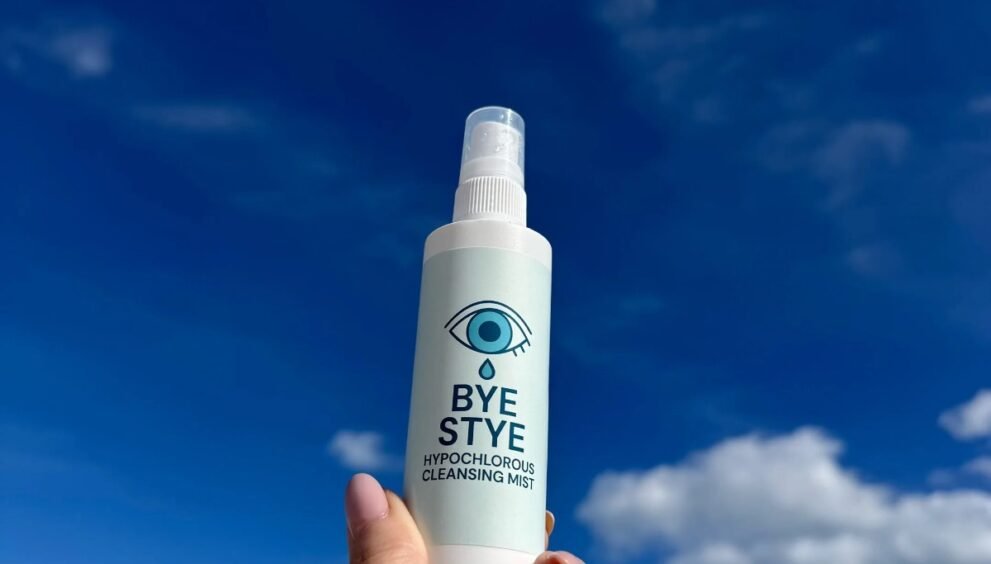
A stye, also known as a hordeolum, is a common eyelid problem that can cause localized redness, swelling, tenderness, and discomfort near the lash line. Because bacteria and blocked eyelid glands can contribute to stye development, eyelid hygiene often forms an important part of supportive care. Hypochlorous acid has attracted attention as a gentle antimicrobial option for cleaning the eyelid area. However, evidence for hypochlorous acid for styes needs to be interpreted carefully. Research supports its role in eyelid hygiene and conditions such as blepharitis, but direct clinical evidence showing that hypochlorous acid alone cures an active stye remains limited.
What Is a Stye?
A stye is a small, usually painful lump that develops around an eyelid gland. An external stye commonly occurs near an eyelash follicle, while an internal stye develops deeper within the eyelid. Bacterial involvement, particularly involving organisms naturally found on the skin, can contribute to inflammation and infection. Blocked oil glands, eyelid debris, makeup residue, and chronic eyelid inflammation may also create conditions that encourage recurring problems. Most uncomplicated styes improve naturally, although persistent, severe, or vision-affecting symptoms require professional eye care.
What Is Hypochlorous Acid?
Hypochlorous acid, often abbreviated as HOCl, is a naturally occurring antimicrobial molecule produced by the immune system. In properly formulated topical products, low concentrations can be used for cleansing the skin and eyelid area. Its antimicrobial activity is one reason HOCl has become increasingly relevant to modern eyelid hygiene. Importantly, a product formulated for facial or eyelid use is not automatically equivalent to a sterile ophthalmic solution, so formulation and directions matter.
What Does the Evidence Say About Hypochlorous Acid for Styes?
The strongest available clinical evidence currently relates to eyelid hygiene, blepharitis, bacterial load, and ocular-surface health rather than stye treatment itself. A randomized study published in 2023 evaluated hypochlorous acid hygiene solution in people with blepharitis and mild-to-moderate dry eye disease. After four weeks, the hypochlorous acid group showed improvements in tear-film stability and a significant reduction in bacterial load on the eyelid margins. The findings support HOCl as a useful eyelid-hygiene approach, but the study was not designed specifically to prove that HOCl eliminates active styes.
A separate randomized clinical trial examined 0.01% hypochlorous acid delivered through ultrasonic atomization for people with blepharitis. Improvements were observed in several measures, including ocular-surface symptoms, lid-margin redness, lid abnormalities, and meibum quality. No adverse events were reported in the study. Again, the results are encouraging for eyelid hygiene and inflammation management rather than direct proof of stye resolution.
Does Hypochlorous Acid Cure an Active Stye?
Current evidence does not justify describing hypochlorous acid as a stand-alone cure for an active stye. HOCl may help reduce surface microbial load and keep the surrounding eyelid area cleaner, but a stye involves inflammation and blockage within an eyelid gland or follicle. Cleaning the surface does not necessarily remove the underlying blockage. For this reason, hypochlorous acid is better understood as a supportive hygiene measure rather than a replacement for appropriate treatment.
Recent research published in 2026 also highlights this distinction. A randomized trial comparing eyelid cleansing wipes, hypochlorous acid-assisted cleansing, and saline-assisted cleansing found that all approaches could be evaluated for blepharitis-associated ocular-surface disease, but superiority of hypochlorous acid over the other approaches was not established. The result reinforces the need to avoid overstating the evidence.
How Hypochlorous Acid May Support Eyelid Hygiene
The potential value of hypochlorous acid comes mainly from its antimicrobial and cleansing properties. Regular, gentle eyelid hygiene can help remove accumulated debris, oils, cosmetic residue, and microorganisms around the lash line. For people prone to recurrent eyelid irritation or styes, maintaining a clean lid margin may form part of a broader prevention routine. The evidence is stronger for managing eyelid conditions such as blepharitis than for preventing every future stye, so expectations should remain realistic.
Warm Compresses Still Matter
Warm compresses remain an important traditional measure for uncomplicated styes because warmth can soften material within blocked glands and encourage natural drainage. Hypochlorous acid should not automatically replace this approach. A practical routine may involve appropriate eyelid cleansing alongside a warm compress, depending on the specific condition and advice from an eye-care professional. Squeezing, puncturing, or aggressively rubbing a stye can increase irritation and potentially worsen the problem.
How to Use Hypochlorous Acid Safely
Only a product specifically formulated and labelled for eyelid or facial use should be applied around the eyes. Product instructions should always take priority because concentrations, packaging, sterility, and intended application can differ. The BYE STYE instructions, for example, recommend closing the eyes, holding the bottle approximately 15–20 cm from the face, spraying across the eyelids and lashes, and allowing the mist to air dry. The manufacturer specifically states that the product should not be sprayed directly into open eyes.
When Professional Eye Care Is Important
A stye that becomes unusually painful, spreads beyond the eyelid, affects vision, repeatedly returns, or fails to improve deserves assessment by an optometrist, ophthalmologist, or other qualified healthcare professional. A persistent eyelid lump may not actually be a simple stye. Conditions such as a chalazion, blepharitis, or other eyelid disorders can produce similar symptoms but may require different management. Prompt professional assessment is particularly important when swelling becomes extensive or symptoms involve the eye itself.
Hypochlorous Acid for Prevention and Daily Eyelid Care
The evidence makes a stronger case for hypochlorous acid as part of eyelid hygiene than as a direct treatment for an established stye. Clinical studies have demonstrated antimicrobial effects and improvements in certain blepharitis-related measures, while newer research continues to investigate the most effective cleansing methods. This distinction is important because marketing claims can sometimes go beyond what clinical research actually demonstrates. A sensible approach is to view HOCl as a supportive cleansing option that may help maintain a cleaner eyelid environment, rather than as a guaranteed stye treatment.
Why The Bye Co. Is Worth Considering for Eyelid Care
The Bye Co. focuses on gentle eye and skin-care products designed around everyday eyelid hygiene. Its BYE STYE product contains hypochlorous acid and is formulated for use around the eyelids, lashes, and surrounding skin. The brand also offers biodegradable eyelid wipes and preservative-free eye drops, creating options for different aspects of daily eye care. According to The Bye Co., its products are developed with clinical input and avoid alcohol, artificial fragrance, and harsh preservatives. The value of The Bye Co. is therefore centered on convenient, gentle eyelid-care routines while keeping product use separate from claims of curing an active stye.