
 English


10 Signs of Separation Anxiety in Dogs & How to Help

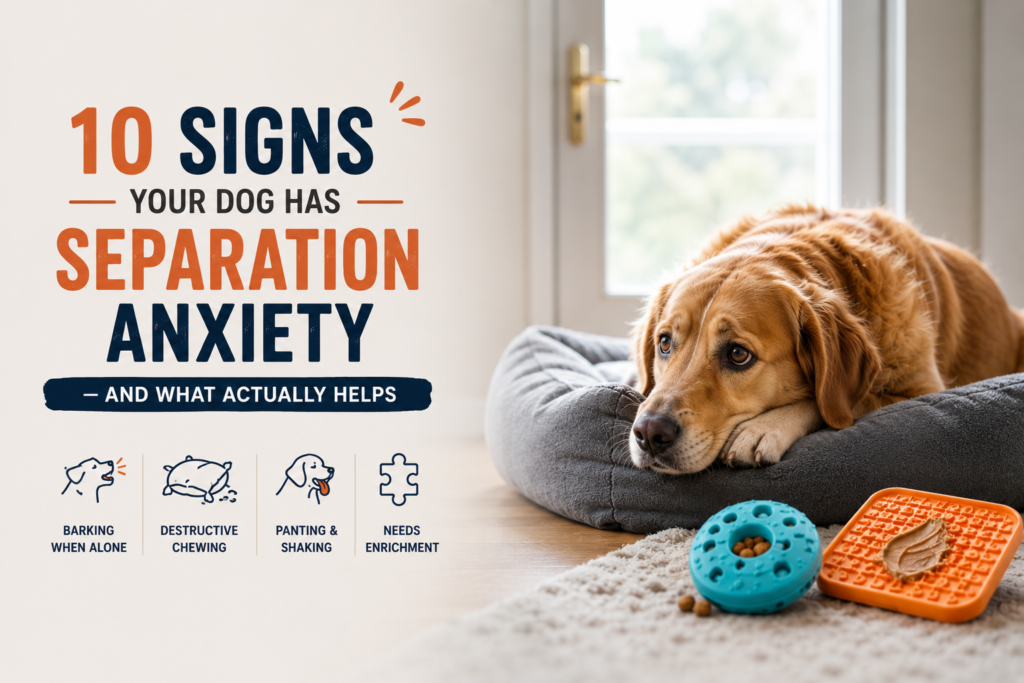
10 Signs Your Dog Has Separation Anxiety — and What Actually Helps
Most dogs do not like seeing their favourite humans leave the house. You might notice pacing behind you, scratching at the door, whining or sighing dramatically because they are sad seeing you go. However, then they regulate themselves by sitting down for a nap. This is normal, as dogs are social animals and like company at all times.
However, if your dog follows you everywhere, even to the bathroom, and upon closing the door they become extremely distressed (or whimper). Then this might not mean clinginess, but it is one of the signs of separation anxiety in dogs.
What is Separation Anxiety in dogs?
Separation anxiety isn’t your dog being naughty. It’s fear — real, raw panic.
Think about it: your dog’s whole world is you. You’re their comfort, their safety, their reason to feel okay. So when you walk out that door, even for a minute, their mind doesn’t understand “I’ll be back soon.” All it knows is that they’re gone. It’s not so different from a person’s panic attack — that same flood of helplessness and fear.
And for some, the reason for that anxiety is deeper, for example:
- Being abandoned once before
- Being physically abused
- Loss of previous owner, or a furry companion
- Being in rescue/shelter homes
So be patient. Be gentle. Every dog carries their own story, and every story deserves understanding.
Signs Of Separation Anxiety in Dogs
The signs of separation anxiety can be either subtle or dramatic. It can also become difficult to distinguish between boredom and anxiety. So it is very important to observe the following signs:
- Excessive Barking or Howling
Is your dog being more vocal than usual? Does he start barking as soon as you leave? If yes, then your dog may have separation anxiety. It is not boredom.
A dog barking when alone or howling is a sign of distress. Most dog owners find out about it once someone from next door tells them or once they look at the pet camera footage.
- Destructive Behaviours
Chewed furniture, damaged doors, torn cushions and digging into carpets or chewing anything in sight are signs of destructive behaviours. Such destructive chewing anxiety in dogs stems from stress and not poor training. Your dog isn’t being naughty, and such types of destructive behaviour generally occur when they are left alone.
- Following You Everywhere
Does your dog always follow you from room to room, even into the bathroom without giving you the space to go beyond his line of sight? If the answer to this is yes, then that’s one of the symptoms of separation anxiety in dogs.
It is true that dogs generally like being around their humans. However, sometimes, following you all the time may be an early indicator of separation anxiety.
- Pacing Around the House
If your dog paces back and forth, waiting at the door for your return, then this is again a sign of separation anxiety in your dog. This usually comes to the knowledge of the owner while looking at the pet camera footage. Your dog likely does not like being left alone and struggles to settle down while you are away.
- Dog Panting and Shaking When Alone
Have you ever noticed your dog shaking or panting excessively when left alone, even in a cool room, when there was no physical activity involved? If yes, then this is a sign your dog is experiencing anxiety or distress and is overwhelmed at the thought of you leaving.
- Trying to Escape
Many anxious dogs may scratch at the door, wanting to be left outside or escape when feeling anxious. This happens due to their fight-or-flight instinct. When they are stressed. Their brain is filled with stress hormones. Such attempts to escape through a window or a crate may also result in injuries sometimes.
- Excessive drooling
If your dog is drooling excessively, even puddles of it, way more than usual mealtime drool, then that is another sign of separation anxiety in dogs that most people seem to miss.
This excessive drooling happens when their body’s fight-or-flight response is triggered due to stress, and it confuses their salivary glands, causing them to drool excessively.
- Toileting Indoors
If your dog is taking a dump indoors, even if they are fully house-trained, then it is again a sign of distress. Your dog is not ill-mannered, so punishing them might not be the right way to fix the problem.
- Loss of Appetite
Dogs love to eat, in a way that they always seem hungry. However, if your dog has no appetite to eat, not feeling hungry, it is again a sign you should be careful enough to observe (unless there is an underlying medical issue).
Some dogs do not touch their food unless their owners get home. - Over-the-Top Greetings
After coming home, if your dog is overjoyed to see you, it feels more like relief, with frantic jumping, crying, or trembling. Then your dog suffers from separation anxiety.
How to Help Dogs with Separation Anxiety
Now for the good news – separation anxiety is very easily managed when done correctly. There are a few tips that will definitely work for you:
✦ Try a short absence.
Go for one minute and return calm, no fuss. Increase the duration gradually. It will help reprogram your dog’s mind to perceive your departure as a non-life-threatening event.
Build up their alone time slowly instead of straight away going for long hours.
✦ Make Your Departure/Arrival Low-key
Make departure and arrival quiet. Avoid emotional goodbyes and enthusiastic greetings – they only serve to emphasise the importance of your departure/arrival.
✦ Create a safe resting space
Some dogs need somewhere to go and feel secure.
Having a Chew-Resistant Dog Bed provides a special corner where your dog will feel at ease when you’re not home.
✦ Keep them busy
Keeping them busy through dog enrichment activities is one of the best ways deal with their anxiety. Some of the enrichment activities are:
- Scent games
- Snuffle Mats
- Dog Puzzle Toys
✦ Try a Licking Mat
Repetitive licking is quite soothing to many dogs. The licking of treat-filled mats helps in distracting an anxious dog and making him relaxed before you depart from the house.
PetBuds Picks for Anxious Dogs
Being a nervous dog parent doesn’t mean that you have to make many adjustments to your lifestyle. Sometimes, what is needed is just buying some products that will help your dog calm down and gain confidence.
Some of which are:
- A supportive Chew-Resistant Bed as a reliable resting place.
- Interactive dog puzzle toys to allow for independent play.
- Dog boredom toys that reduce stress.
- Licking mats and enrichment feeders for mental calm.
It should be kept in mind that those products can be used only as additional measures together with patience and training.
FAQ’s
- How do I know if my dog has separation anxiety?
Common signs of separation anxiety in dogs are excessive barking or howling, destroying or chewing on everything in their sight, following their owner everywhere, pacing, or shaking and loss of appetite. Most of these signs need to happen in the absence of the owner. - How to help dog with separation anxiety?
Gradual alone-time training, keeping a regular routine, licking mats, enrichment activities, puzzle toys or scent games are great ways to help with their anxiety. - Do licking mats help with dog anxiety?
Yes, dogs tend to find licking mats quite calming. They calm their nervous system and the slow, repetitive licking reduices their stress levels.