
 English


The Role of Speaker Placement in High-Energy Fitness Studios

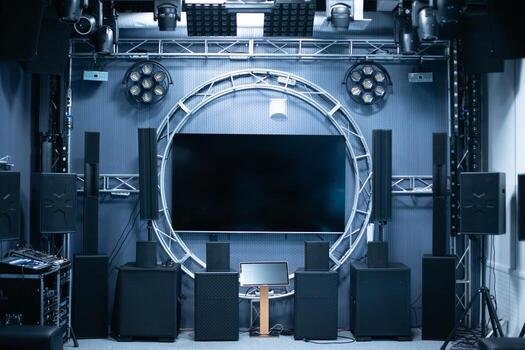
A fitness class changes direction every few seconds. Participants face the instructor, turn towards mirrors, move into floor work and then spread across the room for a final interval. Sound that works at the centre may disappear near a wall or become aggressive beneath one cabinet. Speaker placement has to follow movement, not just the shape of an empty studio. The correct plan begins with a class timetable and a floor map, not a catalogue.
The instructor’s voice is the priority. Music creates energy, but unclear cues lead to late movements and confusion. The system should deliver speech above the programme without forcing the instructor to shout. That requires even coverage at ear level across the spaces where people actually train, including the front row, rear corners and floor-exercise zones.
Mirrors complicate the task because they reflect high-frequency sound. Hard floors and exposed ceilings add further reflections, producing a bright, tiring result. Pointing loudspeakers directly at large reflective surfaces increases the problem. Aiming them across occupied areas, with controlled vertical and horizontal coverage, keeps more useful energy on participants and less on the room.
In many studios, several moderate-level professional audio speakers provide steadier coverage than one very loud pair. Distributed placement shortens the distance between each participant and the nearest speaker. It also reduces the need to drive the front of the room hard enough to reach the back. The exact number depends on the floor area, ceiling height, room shape and cabinet coverage.
Height matters as much as position. Speakers mounted too low may be blocked by standing bodies and face a greater risk of contact. Units placed very high may send sound above the class or create a long path that increases reflections. Secure mounting at a suitable height, with the correct downward angle, supports both safety and consistency. Installation must also respect access routes, doors and moving equipment.
The instructor’s microphone position affects the whole result. A headset normally keeps a steady distance from the mouth as the instructor moves, but it must be fitted properly and protected from sweat. The system gain should allow clear speech without feedback when the instructor approaches a loudspeaker. Placement and processing should be tested with realistic movement, not from a fixed point beside the controls.
Different class formats expose different weaknesses. A cycling session keeps participants in regular rows, while dance fitness sends them across the floor. Circuit sessions create temporary stations that may block a speaker or place people close to one source. Mapping these patterns before installation helps define useful coverage zones and avoids placing sound only for one programme. It also highlights storage areas, retractable equipment and temporary dividers that change the room from day to day.
Bass needs control too. Strong low frequencies add impact, yet excessive bass can mask speech and travel into neighbouring rooms. Subwoofer location changes how evenly bass spreads, especially near corners and walls. The target is firm musical support without creating one booming area. Careful level setting is usually more useful than chasing the strongest possible output.
Testing should include several positions and volume levels. Walk the room while voice and music play together. Listen for dull corners, sharp patches and changes as a person stands or moves close to a wall. Engineers should then adjust the aiming, level and processing of professional audio speakers, checking every change across the whole studio.
Daily use deserves planning after installation. Controls should be simple enough for instructors to set a safe, consistent level. Presets may suit different class types, provided they do not hide obvious problems. Regular checks can catch loose mounts, damaged cables, tired microphones or altered settings before a session begins.
Good placement makes the system feel less noticeable. Participants hear cues wherever they move, music remains balanced, and the instructor does not fight the room. By matching professional audio speakers to movement zones, reflective surfaces and class formats, a studio gains energy without sacrificing clarity or comfort.