
 English

What Happens When Silence Becomes the New Status Symbol

An engine’s roar used to convey a message. Investment, power, and an unreserved presence on the road. Petrolheads understood the language, and passersby recognised it. The sound itself was part of the statement, an audible signal that whoever was behind the wheel had chosen performance over restraint, ambition over economy.
That language is gradually evolving. Not by regulation alone, and not by reluctant compromise, but by genuine preference. More drivers are discovering that responsiveness, smoothness, and silence communicate sophistication in ways a combustion engine never could.
The Reinvention of What Premium Means
Luxury in the automotive world has always been about more than engineering. It concerns the messages that a car sends to both its passengers and spectators from the outside. For many years, certain cues were used to convey that signal, such as the sound of a high-displacement engine pulling smoothly through a bend, the weight of a door shutting, or the softness of leather seats.
Instead of eliminating those cues, electric powertrains replaced them with new ones. The feeling of almost quiet acceleration that pushes you quickly and solidly into your seat. Cabins that can achieve levels of silence difficult for most combustion vehicles to match when the engine is no longer competing for attention. In stop-start city traffic, that quietness becomes especially noticeable, making everyday journeys feel calmer and less fatiguing. When a transmission tunnel is no longer required for interior design, it suddenly frees up space that designers have been utilising in truly inventive ways.
The outcome is a reinterpretation that seems more like evolution than a compromise. Instead of trying to mimic the experience of their predecessors, luxury electric cars are setting new standards, such as the following:
- Responsiveness
- Refinement
A sense that the technology surrounding the driver is working intelligently rather than mechanically.
Why Sustainability and Desirability Are No Longer in Tension
For years, the conversation around electric vehicles carried an undercurrent of sacrifice. You were choosing the environment over enjoyment, practicality over pleasure. The early adopters who made that trade were admired but rarely envied.
That tension has dissolved. Now, drivers who select electric vehicles aren’t compromising; rather, they’re communicating what they find truly appealing. Lower running costs, lower service complexity and the daily comfort of waking up to a full charge rather than organising trips around fuel stops. Many modern electric vehicles now deliver driving experiences that challenge older assumptions.
In particular, premium buyers have noticed. The segment that once demanded a specific combination of brand heritage and mechanical theatre is increasingly asking different questions. How does it feel at urban speeds? How does the interior endure lengthy travels? Does the technology make the experience better or just make it noisier?
The Space Where Design and Driving Intersect
The most interesting area in this shift is occupied by a specific type of car that refuses to let practicality take precedence over personality. Compact SUVs and crossovers with true premium credentials have attracted a sizeable market because they can satisfy several needs at once without clearly straining to do so.
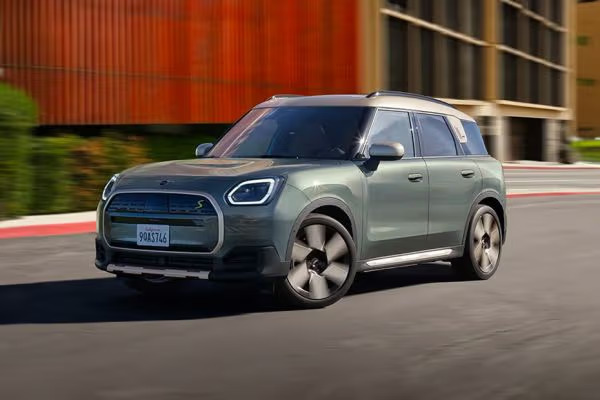
The Mini Countryman Electric represents this intersection with notable confidence. It translates into a fully electric package without the discomfort that frequently accompanies a heritage model attempting modernity. It carries the design conviction that has always set the brand apart, an unwillingness to fit in, and a preference for thoughtful detail over the generic proportion. The result feels coherent rather than transitional, as though the electric version is where the vehicle was always headed.
Driving Into a Different Kind of Future
The drivers choosing this new generation of vehicles aren’t abandoning what they loved about cars. They’re finding it expressed differently, in the precision of a well-weighted steering response, the quality of materials chosen for a cabin that will be experienced in near silence, and the confidence of a drivetrain that performs without spectacle.
Status has rarely been solely about noise. It was about the quality of attention to craft, to experience, and to the small details that signal genuine investment in what driving can be. That sensibility translates naturally into the electric era. The road ahead is quieter. And considerably more compelling for it.