
 English
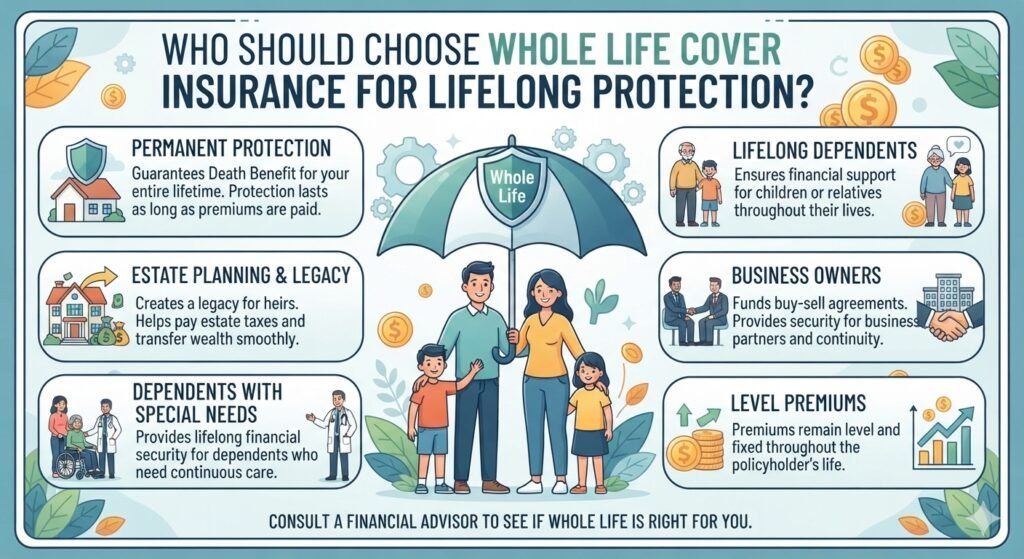


Who Should Choose Whole Life Cover Insurance for Lifelong Protection?

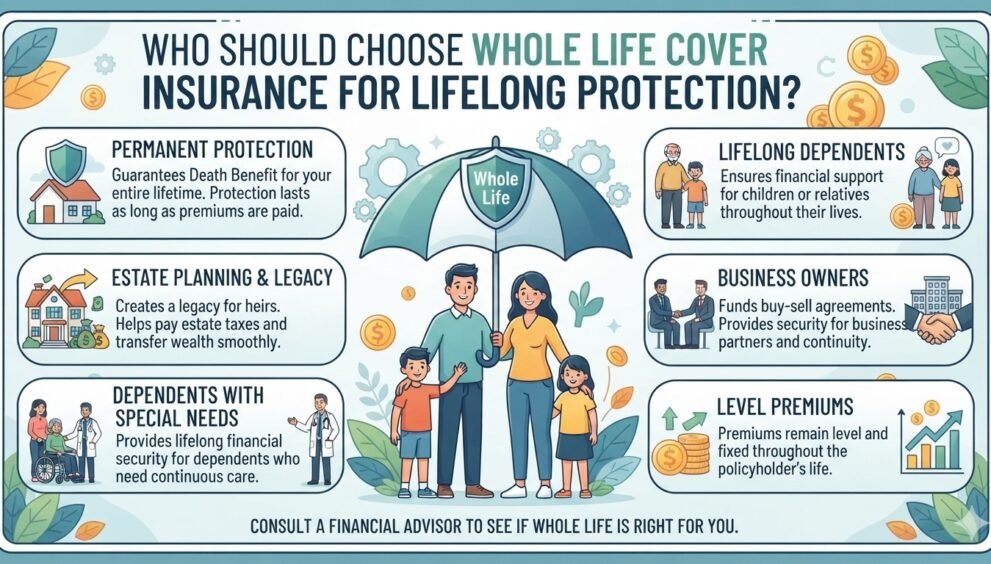
Whole life cover insurance is designed for people who want life insurance protection that continues for a much longer period than a standard term policy. Depending on the policy, the cover may continue up to a specified advanced age, such as 99 years, or for the whole of the life insured’s lifetime as defined by the policy terms.
This type of cover can be useful when the financial need for protection is expected to continue for many years. However, it may also involve a higher premium than a term plan, so affordability and the purpose of the cover should be considered before choosing it.
What is whole life cover insurance?
Whole life cover insurance is a form of life insurance that provides life cover for an extended period. Unlike a standard term plan that usually covers a fixed policy term, a whole life policy is structured to provide protection for a much longer period.
The exact duration depends on the policy. Some policies specify cover up to a particular age, while others describe the cover as continuing for the lifetime of the life insured, subject to the policy conditions.
The policy document should therefore be checked carefully for the policy term, premium payment period and conditions attached to the cover.
Who may need lifelong protection?
Whole life cover may be relevant for people who have financial responsibilities that can continue well beyond their working years.
It may suit someone who wants to:
- Leave financial support for dependants
- Create a financial legacy for family members
- Provide protection beyond normal retirement age
- Support long-term estate planning
- Maintain life cover when dependants may still have financial needs later in life
For example, a person may want life cover to continue beyond the age when a typical term policy would end because the financial purpose of the policy extends to later years.
Why can lifelong cover be useful?
The main value of whole life cover insurance is the longer duration of protection.
A term insurance policy is generally selected to cover a defined financial responsibility, such as a home loan, children’s education or income replacement during working years. Once the term ends, the cover usually ends unless the policy provides otherwise.
Whole life cover is structured differently. It can continue for a much longer period and may therefore support financial planning that extends beyond retirement.
This can be particularly relevant when the purpose is not limited to replacing working income.
What should you consider before choosing it?
The first question should be why you need life cover for such a long period.
If the main concern is protecting a family during working years, a term policy with a suitable policy period may meet that need. If the objective is long-term family protection or legacy planning, whole life cover may deserve consideration.
Affordability is also important. A policyholder needs to be able to pay premiums as required under the policy terms. Choosing a large cover amount without considering long-term affordability can create difficulties later.
The premium payment period also matters. Some policies require premiums throughout a long period, while others allow premiums to be paid for a limited number of years.
How does whole life cover differ from term insurance?
The main difference is the duration and purpose of the cover.
A term insurance plan generally provides death cover for a fixed policy term. It is often used to protect income and financial responsibilities during a selected period.
Whole life cover insurance is designed for much longer protection and may continue to an advanced age or for the lifetime of the life insured, depending on the policy.
The cost can also differ. Whole life policies may have higher premiums because the insurer is providing cover for a longer period and may include additional policy features.
The right choice depends on the financial need rather than simply comparing premiums.
Can whole life insurance include savings features?
Some whole life policies may combine life cover with savings or investment-related features. Others may focus more directly on protection.
This means that not every whole life policy works in the same way.
If a policy includes a savings component, the policyholder should check how the value is calculated, what charges apply, whether returns are guaranteed or market-linked, and what happens if the policy is discontinued early.
The policy document and benefit illustration should be reviewed before making a decision.
Is whole life cover useful for estate planning?
It can be relevant to estate planning because the life cover may continue into later life.
For example, a person may want to leave a financial amount for family members or provide funds for a future financial obligation. Long-term life cover can form one part of such planning.
However, life insurance should not be treated as a replacement for a properly prepared will or other estate planning documents. The ownership, nomination and legal arrangements should be reviewed according to the individual situation.
Who may not need whole life cover?
Whole life cover may not be necessary for everyone.
A person whose main financial responsibilities end before retirement may prefer a term policy designed around those responsibilities. Similarly, someone with limited income should first consider whether the required premium can be maintained over the long term.
It is also important not to use life insurance as an emergency fund. Money needed for short-term expenses should generally be kept separately in an appropriate liquid form.
What should you check before choosing a policy?
Before choosing whole life cover insurance, check:
- The maximum age or duration of the life cover
- Premium amount and payment frequency
- Premium payment term
- Sum assured or applicable death cover
- Policy exclusions and conditions
- Surrender and discontinuation rules
- Any maturity or savings-related provisions
- Nomination requirements
- Tax treatment under the applicable Income Tax Act
- Whether the cover matches your actual financial responsibilities
These details can vary significantly between policies.
Conclusion
Whole life cover insurance may suit people who want life insurance protection that continues well beyond their working years. It can be relevant for long-term family protection, later-life financial responsibilities and legacy planning.
What is an endowment plan? An endowment plan is a life insurance policy that combines life cover with a savings component. It typically provides a maturity benefit if the policyholder survives until the end of the policy term, subject to the policy conditions. A death benefit is generally payable to the nominee if the policyholder passes away during the term.
However, lifelong protection also requires a long-term commitment to the policy terms and premiums. Before choosing it, consider the purpose of the cover, affordability, policy duration, premium payment period and other conditions.
For someone whose main need is income protection during working years, term insurance may be more suitable. For a person with a genuine need for protection extending into later life, whole life cover can be considered as part of a wider financial plan.