
 English


Growing Roses at Home — Why the Traditional Variety Deserves More Credit

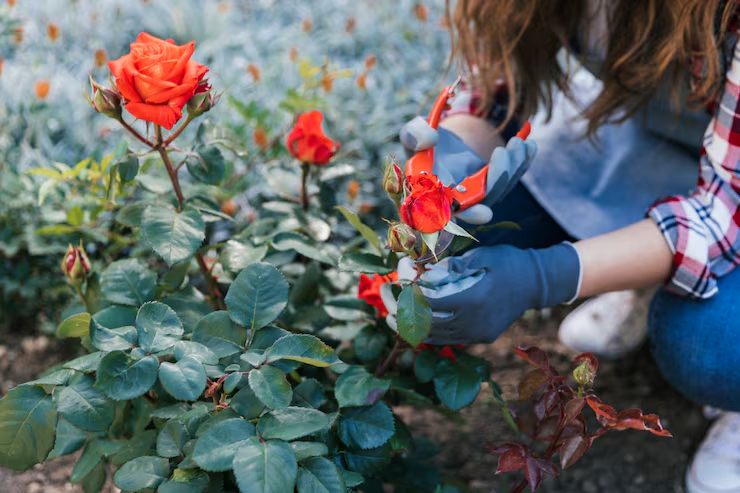
The rose has a reputation for being difficult. Ask most casual gardeners and they’ll tell you roses need constant attention — specific fertilisers, careful pruning schedules, vigilant pest management, and the right soil chemistry. That reputation is largely built around hybrid varieties, which have been bred for visual perfection at the cost of natural resilience. The traditional Indian rose tells a very different story.
Grown across the subcontinent for centuries, the desi rose is as well-suited to Indian gardens as any plant could be. It evolved here, adapted here, and has been thriving in kitchen gardens, temple courtyards, and roadside pots long before the hybridisation era arrived. If you’ve been hesitant to grow roses because of the maintenance reputation, this variety is worth a second look.
Desi vs Hybrid — Understanding the Real Difference
The difference between desi and hybrid roses goes deeper than appearance.
Hybrid roses — particularly hybrid tea varieties — were developed primarily in Europe for the cut flower trade. They were bred to produce large, uniform blooms with long stems and a wide range of colours. To achieve this, breeders selected for visual traits over generations, often at the expense of fragrance, disease resistance, and adaptability. The result is a plant that looks spectacular under ideal conditions but struggles in the heat, humidity variation, and soil types typical of Indian gardens.
The desi rose, by contrast, was never engineered for a showroom. Its fragrance compounds — primarily citronellol, geraniol, and nerol — are present in concentrations that most hybrids simply cannot match. This is why traditional rose water, attar, and gulkand are all made exclusively from desi varieties. The scent is the point, and no amount of visual engineering has managed to replicate it in a hybrid form.
In terms of growth habit, the differences are equally clear. Desi varieties are vigorous and bushy, often producing multiple flowering flushes across the year with minimal intervention. They handle periods of heat and dryness without the dramatic leaf drop that affects many hybrids, and they resist common fungal diseases more effectively because their natural growing environment prepared them for exactly these conditions.
How to Tell Them Apart
If you’re looking at a rose plant and unsure which type it is, a few reliable indicators help:
Fragrance first — Hold a bloom close and breathe in. A genuine desi variety will have a deep, complex scent that’s immediately recognisable. If the flower has little or no fragrance, it’s almost certainly a hybrid.
Petal structure — Desi blooms typically have fewer petals arranged in a simpler, more open form. Hybrid tea roses have the classic tightly spiralled, high-centred bloom with many layered petals.
Stem thickness — Hybrid roses tend to have thicker, woodier canes with prominent thorns. Desi varieties usually have thinner, more flexible stems with smaller thorns and a tendency to arch or sprawl naturally.
Leaf surface — The foliage of desi roses is often slightly rougher and darker green compared to the smoother, shinier leaves of many modern hybrids.
Three Main Rose Types Worth Knowing
For anyone building a rose garden or selecting varieties for a specific purpose, understanding the broader categories helps:
Species roses — The original, wild forms from which all cultivated varieties descend. Extremely hardy, often single-flowered, and highly fragrant. The desi rose falls within or very close to this category in terms of characteristics.
Old garden roses — Varieties that predate 1867, the agreed classification point for modern roses. These include gallicas, damasks, and centifolia roses — all known for intense fragrance and good disease resistance. Many traditional Indian varieties share characteristics with these old European types.
Modern hybrid roses — Everything developed after 1867, including hybrid teas, floribundas, and grandifloras. Bred for visual impact and commercial viability, these are the varieties most commonly found in florist shops and garden centres.
Growing a Red Rose Plant Successfully at Home
The red rose plant in its desi form is one of the more rewarding plants to grow at home, provided the fundamentals are right.
Sunlight — A minimum of five to six hours of direct sun daily is essential for consistent flowering. A south or east-facing position works best. Without adequate sun, the plant will grow but produce fewer blooms.
Soil — Well-draining loamy soil enriched with compost gives roots the nutrition and structure they need. Avoid heavy clay that retains water around the root zone.
Watering — Deep, infrequent watering is far better than light, frequent watering. Allow the top inch of soil to dry between sessions. Consistent moisture at the root level, rather than surface dampness, is what the plant actually needs.
Pruning — Remove spent flowers promptly to encourage the next flowering flush. A more thorough pruning in the cooler months — cutting back to strong outward-facing buds — sets up the plant for vigorous growth in spring.
Feeding — Organic matter applied at the base every four to six weeks during the growing season supports healthy growth without the risk of fertiliser burn that synthetic options carry.
Conclusion
The desi rose has survived in Indian gardens not through careful cultivation programmes or commercial support, but simply because it belongs here. It’s fragrant, resilient, culturally significant, and far easier to grow than its hybrid counterparts. For anyone who has wanted to grow roses but been put off by the reputation for difficulty, this is the variety that changes the calculation entirely. Start with a healthy, well-rooted specimen, give it sun and decent drainage, and let it do what it has been doing in Indian gardens for centuries.